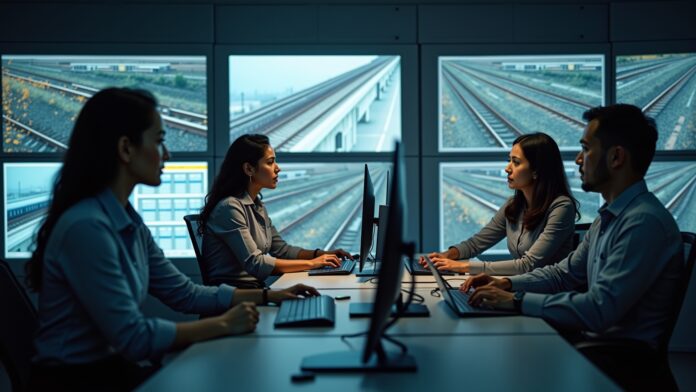




As you steer your enterprise toward the future of transportation and infrastructure innovation, the integration of Korean track defect detection technology into India’s bullet train system is a development you cannot afford to overlook. This collaboration not only strengthens the safety and reliability of high-speed rail but also exemplifies how strategically harnessing AI, sensor data, and real-time analytics can redefine operational excellence and asset management at scale.
Why This Matters to You
Your investment decisions, enterprise technology strategies, and infrastructure roadmaps hinge on breakthroughs that enhance operational integrity while lowering risk. With bullet trains operating at unprecedented speeds, latent track defects become critical vulnerabilities that traditional inspection methods struggle to catch early. For technology leaders and policymakers, Korea’s advanced defect detection system exemplifies how AI-powered digital infrastructure is essential for future-proofing safety, enhancing digital trust, and enabling predictive maintenance frameworks in complex industrial and transportation ecosystems.
What Is Happening
India is embedding Korean sensor-based diagnostics technology into its bullet train network to detect track defects at early stages. This system leverages real-time data analytics and AI algorithms to monitor structural integrity continuously, enabling predictive maintenance and mitigating costly downtime and safety incidents. Beyond a technology upgrade, this partnership underscores the increasing importance of cross-border collaboration in enterprise technology deployment, particularly where precision and safety are paramount.
Key Business and Technology Impacts
- Operational Efficiency & Predictive Maintenance: The early detection capability transitions maintenance from reactive to predictive, reducing unscheduled delays and extending track lifespan.
- Safety and Reliability: Real-time fault detection enhances passenger safety at speeds that challenge conventional rail engineering limits.
- Digital Infrastructure Evolution: Integrating AI and cloud-based analytics platforms into critical infrastructure sets a precedent for future smart transportation systems.
- Strategic Global Partnerships: Korea-India collaboration illustrates a path for leveraging international technology innovation to accelerate domestic infrastructure modernization.
Strategic Analysis and Deeper Insight
From a strategic lens, Korea’s defect detection technology offers you a blueprint for how AI and IoT sensors are converging to create resilient, self-monitoring infrastructure. This is no longer hypothetical; it’s an operational imperative as high-speed rail demands unprecedented digital precision and security layers. Embedding such technology is a signal for your enterprise to prioritize end-to-end digital transformation—across data acquisition, edge computing, cloud integration, and AI analytics—to achieve real-time insights and enhanced operational control.
Moreover, this initiative illuminates the growing complexity of securing connected industrial ecosystems. As you design infrastructures reliant on sensor-generated data, embedding cybersecurity and data integrity frameworks becomes paramount to safeguard against operational disruptions and data tampering risks. It’s a clarion call for your teams to elevate digital trust into a foundational component of infrastructure modernization.
“In technology, innovation matters — but scalable execution is what creates lasting advantage.”
“The real edge is not only in building new tools, but in turning infrastructure, intelligence, and trust into business outcomes.”
Practical Takeaways for Technology Leaders
- Evaluate AI-Driven Predictive Maintenance Solutions: Consider how sensor fusion and real-time analytics can be integrated within your asset management strategies.
- Build Cyber-Resilience into Digital Infrastructure: Prioritize security protocols that protect AI-enabled operational systems against emerging cyber threats.
- Leverage Global Partnerships: Collaborate with international technology innovators to accelerate deployment and harness best-in-class solutions.
- Incorporate Data-Driven Decision Making: Embed continuous monitoring systems to transform raw data into actionable infrastructure insights.
Expert Perspective
For enterprise software and infrastructure strategists, this development signals the expanding role of AI and IoT in transforming traditional operational models. The Korea-India partnership is an exemplar of how next-generation transportation infrastructure demands integrated digital ecosystems that prioritize safety, efficiency, and long-term sustainability.
“When AI, data, and operational discipline align, technology growth becomes far more defensible.”
Risks and Challenges
Adopting cutting-edge technology at infrastructure scale involves risks you should anticipate. The dependency on digital sensor networks increases exposure to cyber threats, requiring you to invest robustly in cybersecurity and incident response frameworks. Additionally, integrating foreign technology necessitates clear data governance policies to ensure compliance with local regulations and safeguard digital sovereignty.
Operationally, the initial complexity of embedding and calibrating advanced sensors can occasionally lead to deployment delays and learning curves within maintenance teams. Preparing your workforce with training and change management will be critical.
What You Should Watch Next
Keep a close eye on how the Korean technology integration scales across India’s expanding bullet train routes and how the data insights influence operational models. Monitor regulatory adjustments in digital infrastructure governance and emerging cybersecurity standards shaping cross-border technology deployments. Evaluate similar AI-powered sensor innovations in adjacent infrastructure sectors like highways, energy grids, and urban transit to identify opportunities for broader enterprise transformation.
Conclusion
Incorporating Korean track defect detection technology into India’s bullet train infrastructure is a pivotal milestone that underscores the confluence of AI-driven analytics, cloud-enabled data processing, and critical industrial hardware. For your enterprise, this means embracing intelligent infrastructure investments that boost safety, reduce operational risk, and enhance long-term competitive positioning in the fast-evolving transport ecosystem. As you navigate the next wave of infrastructure digitization, the Korean-Indian collaboration serves as a compelling case for leveraging global innovation and operational discipline to build resilient, future-ready transportation networks.