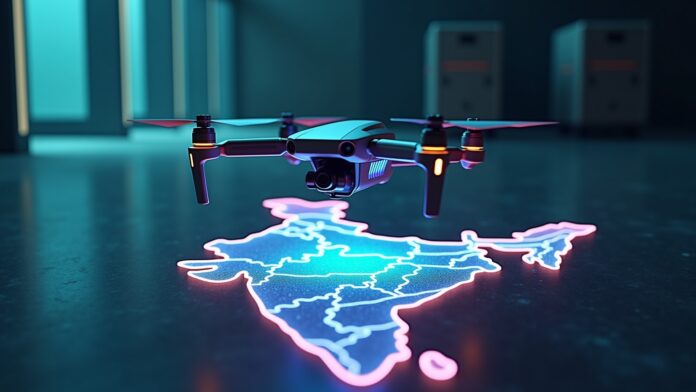




As you steer your technology business or enterprise roadmap through the evolving landscape of autonomous systems, India’s emerging focus on drone technology paired with object intelligence in robotics demands your attention. This is not simply an innovation story but a strategic pivot that could redefine how your organization approaches AI-enabled automation, infrastructure investment, and product strategy. Navigating India’s drone and object intelligence trajectory could unlock significant market opportunities or expose you to complex regulatory and operational challenges if overlooked.
Why This Matters to You
If you are a founder, investor, or enterprise technology leader, understanding India’s drone technology evolution and its integration with sophisticated object intelligence is essential. These trends don’t operate in isolation—they ripple across your cloud infrastructure plans, AI adoption curves, semiconductor investments, and even your competitive positioning in global markets. India stands at an inflection point where regulatory frameworks, security imperatives, and digital infrastructure maturity must align with technological innovation for scalable and sustainable growth.
What Is Happening in India’s Drone and Robotics Landscape
India’s drone dilemma articulates itself as a balancing act—ambitious commercial drone applications versus stringent regulatory, security, and infrastructure conditions uniquely shaped by the country’s geography and policies. Across logistics, agriculture, defense, and smart urban management, AI-driven drones empowered by object intelligence promise to transform operational modalities.
Object intelligence—a capability that enables drones and robots to autonomously perceive, analyze, and react to their surroundings—is shifting enterprise automation beyond traditional robotics. Indian startups at the forefront of this blend are crafting not just the physical devices but also the AI-centric platforms that can be scaled across multiple industries, signaling India’s rising stature in next-generation technology.
Key Business, Technology, and Policy Implications
- Semiconductor and Compute Ecosystem Impact: To seamlessly operate drones with real-time object intelligence requires advanced semiconductor design and high-performance compute. India’s nascent semiconductor ecosystem must accelerate innovation coupled with strategic partnerships to meet these computational demands.
- Cloud and Edge Infrastructure Needs: Massive data throughput and latency-sensitive processing underpin AI-driven drone operations, placing intense demand on India’s cloud modernization and edge computing capabilities.
- Regulatory and Security Framework: India’s unique airspace management, data governance standards, and cybersecurity safeguards are pivotal to balancing innovation with national sovereignty and security.
- Policy Influence on Tech Sovereignty and Entrepreneurship: How India negotiates its drone dilemmas will set regulatory precedents affecting digital trust, AI threat resilience, and startup scalability across the tech ecosystem.
Deeper Strategic Insights: Beyond the Hardware
Your strategic focus should extend beyond hardware manufacturing to the platform economics of AI orchestration and digital infrastructure integration. The convergence of autonomous systems reflects an enterprise transformation vector where AI models, cloud-native services, and edge compute nodes converge to create superior operational intelligence and efficiency.
Investing in or partnering with Indian startups pioneering drone object intelligence involves evaluating their approach to system integration, data management, and compliance with India’s evolving digital sovereignty mandates. It’s about weaving together hardware innovation with AI, cybersecurity, cloud infrastructure, and policy alignment to sustain competitive advantage.
“In technology, innovation matters — but scalable execution is what creates lasting advantage.”
“The real edge is not only in building new tools, but in turning infrastructure, intelligence, and trust into business outcomes.”
Practical Takeaways for Technology Leaders and Investors
- Understand the nuances of India’s regulatory landscape impacting drone deployment, especially data use and airspace governance.
- Monitor advancements in object intelligence platforms integrating AI, IoT sensors, and robotics for scalable enterprise uses.
- Prioritize investments and organizational capabilities aligned with cloud modernization and edge computing architectures capable of supporting drone data volumes.
- Engage with policy discourse and digital sovereignty frameworks shaping India’s drone and AI ecosystem.
- Explore partnerships with startups innovating at the intersection of AI-enabled robotics and semiconductor design to future-proof your technology stack.
Expert Perspectives
“When AI, data, and operational discipline align, technology growth becomes far more defensible.”
These insights underscore that your success depends on a multidisciplinary approach, blending technology execution with regulatory and infrastructural foresight.
Risks and Challenges to Consider
You need to be wary of India’s complex regulatory environment that can slow down or restrict drone deployment. Security concerns particularly around AI-enabled autonomous systems present risks of misuse or vulnerability that require robust cybersecurity protocols. Infrastructure gaps, especially in cloud and edge capabilities, pose operational bottlenecks that may hinder real-time analytics essential for object intelligence.
What You Should Watch Next
Keep an eye on India’s evolving regulatory frameworks for drone operations, announcements around cloud infrastructure investments, and advancements in semiconductor partnerships. Watch how startups refine AI models for object intelligence and how enterprises incorporate these technologies into broader digital transformation initiatives. Also, monitor policy shifts related to digital sovereignty and data governance that will shape long-term market dynamics.
Conclusion: Positioning Your Enterprise for India’s Drone and Object Intelligence Revolution
Your strategic roadmap should integrate the complex but promising ecosystem emerging around India’s drone technology and object intelligence. This technology convergence is more than a sector trend—it is shaping India’s role as a potential global contender in AI-driven autonomous systems and intelligent hardware.
Embracing this challenge requires you to balance innovation execution with regulatory compliance, infrastructure readiness, and policy agility. For your enterprise or investment portfolio, aligning to India’s drone technology and object intelligence trajectory today can secure a leadership position in tomorrow’s intelligent enterprise landscape.