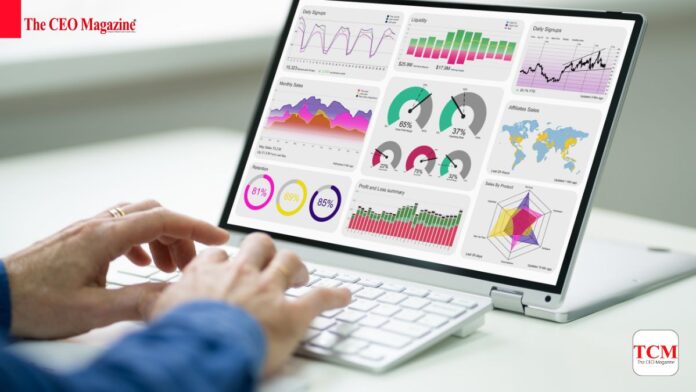




There’s a moment most CEOs won’t admit to: when the board asks, “What’s our current performance looking like?” and suddenly the room feels heavy. Not because things are going wrong—but because numbers are scattered across Excel sheets, emails, WhatsApp forwards, and the heads of different departments. That’s exactly where KPI dashboards step in. They don’t just show data. They bring clarity. They create control. And they tell a story that leaders can act on—without second-guessing themselves.
The charm of a good dashboard is simple: it makes complex decisions feel easier. Whether you’re running a bootstrapped startup in Pune or a funded tech firm in Gurgaon, the right dashboard behaves like a compass—steady, reliable, and always pointing towards growth.
Let’s walk through the ten dashboards every CEO should know. Not theoretically, but the kind you can plug into your business tomorrow morning.
1. Financial Health Dashboard – The Pulse Check
A business can survive slow sales, but it can’t survive cash confusion. That’s why financial dashboards often become a CEO’s favourite screen. It tracks cash flow, expenses, revenue, gross margins, burn rate, and profits.
Tools like Zoho Books, QuickBooks, or Tally Prime with BI plugins can visualise financial KPIs clearly. One glitch in recurring expenses, and you’ll spot it immediately. Almost like a heart monitor for the company. Once CEOs start using this regularly, guesswork disappears—and budgeting finally makes sense.
2. Sales Performance Dashboard – Where Targets Meet Reality
Here’s the thing—sales data usually looks impressive in PowerPoint. But dashboards show what’s truly converting and what’s dragging. A sales performance dashboard focuses on:
- Conversion rate
- Average deal size
- Sales cycle duration
- Win/loss ratio
- Customer acquisition cost (CAC)
Often, CEOs realise that the problem isn’t sales effort—it’s the wrong pipeline strategy. Tools like HubSpot Sales Hub, Pipedrive, and Salesforce CRM dashboards are widely used in Indian startups and SMEs. They don’t just track numbers; they reveal patterns.
3. Customer Experience Dashboard – The Silent Growth Driver
Customer satisfaction isn’t always visible, but its absence is felt sharply. An effective CX dashboard monitors:
- Net Promoter Score (NPS)
- Customer retention rate
- First response time
- Support ticket volume
- Churn patterns
You know what? Sometimes the problem isn’t low sales—it’s unhappy customers who quietly left. CEOs often find their biggest insights here. Tools like Freshdesk Analytics, Zendesk Dashboard, and Intercom help quantify a feeling—customer trust.
4. HR & Workforce Dashboard – Beyond Headcounts
Hiring isn’t the same as building a team. This dashboard tracks metrics that reveal workforce productivity and stability—like employee satisfaction, turnover rate, average time to hire, training efficiency, and absenteeism.
It’s surprising how many CEOs overlook this area until attrition spikes. Platforms like Keka HR, Zoho People, and BambooHR are already used by Indian businesses to keep people decisions grounded in data—not assumptions.
5. Marketing ROI Dashboard – Does the Spend Make Sense?
Marketing often consumes budgets quickly. And when results are unclear, uncomfortable questions follow. A marketing KPI dashboard shows:
- Cost per lead (CPL)
- Organic vs. paid traffic
- Campaign performance
- Ad ROI
- Engagement trends
Sometimes, CEOs realise that their ₹5 lakh campaign was actually underperforming while a small unpaid LinkedIn post brought better leads. AI-driven tools like Google Analytics 4 with Looker Studio, HubSpot Marketing Hub, and Semrush showcase what’s really worth investing in.
6. Operations Dashboard – The Workflow Backbone
This one’s the unsung hero. A good operations dashboard tracks production timelines, bottlenecks, fulfilment rates, vendor delays, or process efficiency. Think of it as an X-ray of your operational flow.
Manufacturing units in Gujarat use SAP Business One, while logistics players in Delhi use Zoho Creator Dashboards for workflow visibility. The idea is simple: once inefficiencies become visible, they become solvable.
7. Project Performance Dashboard – Are Deadlines Realistic?
Projects look perfect on paper. But this dashboard shows real-time progress—planned vs. actual timelines, resource allocation, task completion rates, and risk flags. CEOs use it to see whether teams are on track—or politely avoiding delays in meetings.
Tools like Asana Dashboard, ClickUp, Trello Power BI plugin, and Monday.com are already common across tech startups. When visual reports replace status meetings, productivity naturally rises.
8. Forecasting Dashboard – Tomorrow’s Numbers Today
You know what? Decision-making becomes far more confident when leaders can see three months ahead. Forecasting dashboards use data trends and predictive models to estimate revenue, demand, or expenses.
AI-based systems like Tableau with predictive analytics, Zoho Analytics, and Power BI Forecasting give CEOs something valuable—foresight. It doesn’t guarantee results, but it gives time to prepare. And that alone changes the game.
9. Risk & Compliance Dashboard – The Quiet Shield
Every business has regulatory responsibilities—some more visible than others. A dashboard that tracks compliance deadlines, audit status, legal obligations, and risk exposure prevents last-minute panic.
Many Indian companies use RiskWatch, SAP GRC, or customised dashboards via Power BI for compliance tracking. It may not feel glamorous, but it protects the business when it matters most.
10. CEO Strategic Dashboard – The Bird’s-Eye View
This one blends multiple dashboards into a simplified view—high-level financials, team health, sales velocity, cash reserves, and long-term goals. It’s designed specifically for decision-makers who don’t have time to scroll through a dozen screens.
Think of it like a cockpit display. If something’s off, one look is enough to catch it. Some CEOs even display this dashboard in their office on a wall screen—not to show off, but to remind themselves what the company’s heartbeat looks like.
So, Why Do These Dashboards Matter?
Because clarity changes how people lead. And when data becomes visible, decisions sound more confident. KPIs don’t replace instincts—they sharpen them. A good CEO may rely on people. A great CEO relies on people and data simultaneously.
Growth doesn’t always need more effort. Sometimes it just needs clearer visibility. And that’s what a strong dashboard does—it turns scattered information into disciplined intelligence.
Whether you’re building the next tech giant or running a legacy business that’s adapting to new times, the right dashboard won’t just track progress. It’ll steer it.