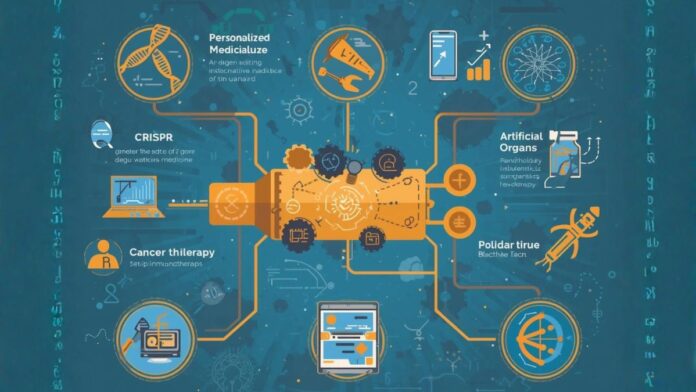




Breakthroughs in biotechnology are reshaping the landscape of healthcare, offering innovative solutions that can dramatically improve patient outcomes. As I explore into these transformative advancements, you’ll discover technologies that are not only addressing life-threatening conditions but also enhancing the overall quality of life. From gene editing to synthetic biology, each breakthrough represents a step forward in our fight against diseases that impact millions globally. Your understanding of these developments could empower you to engage more effectively in discussions about the future of medicine.
Key Takeaways:
- Advancements in gene editing, particularly CRISPR technology, enable precise modifications to DNA, potentially curing genetic disorders.
- Immunotherapy is increasingly effective in treating various cancers by harnessing the body’s immune system to target and destroy tumors.
- Development of synthetic biology allows for the creation of new therapeutic drugs and vaccines, improving treatment options for infectious diseases.
Gene Editing Technologies
Gene editing technologies have revolutionized our ability to alter the genetic code, offering unprecedented approaches to treating diseases. These tools provide scientists with the means to correct mutations, enhance crop resilience, and advance personalized medicine, all of which could significantly impact public health and safety.
CRISPR-Cas9
CRISPR-Cas9 has emerged as one of the most powerful gene editing tools available. This technology allows for precise and efficient alterations to DNA by utilizing a guide RNA to direct the Cas9 enzyme, making it highly effective for targeting specific genetic sequences. It’s not only applicable to treating genetic disorders but also has potential in agricultural innovations to create disease-resistant crops.
TALENs
TALENs, or Transcription Activator-Like Effector Nucleases, are another gene editing technique that enables targeted modifications in the genome. They function by leveraging customizable DNA-binding proteins to recognize specific sequences, leading to double-strand breaks at precise locations. This method is effective in therapeutic applications, offering potential solutions for conditions caused by single-gene mutations.
What sets TALENs apart is their ability to be tailored for specific DNA sequences, allowing for flexibility across various organisms. Since their introduction, researchers have successfully utilized TALENs in targeting genes associated with diseases like sickle cell anemia and . The method boasts a lower risk of off-target effects compared to earlier technologies, making it a favorable choice for clinical applications. Additionally, ongoing developments in TALENs focus on improving efficiency and delivery mechanisms, enhancing their viability as a future tool for gene therapy.
Advances in Stem Cell Research
Recent advancements in stem cell research have opened up new avenues for treating complex diseases and injuries. The discovery of different types of stem cells, including pluripotent stem cells, has created possibilities for personalized therapies. As I investigate deeper into this field, I discover how these cells can be manipulated to develop into various specialized cells, offering hope for conditions previously thought untreatable.
Induced Pluripotent Stem Cells (iPSCs)
Induced pluripotent stem cells (iPSCs) are a revolutionary advancement allowing mature cells to be reprogrammed back into a pluripotent state. This breakthrough means I can generate patient-specific stem cells from easily accessible tissues, such as skin or blood. The potential to produce any cell type makes iPSCs a powerful tool in personalized medicine, providing avenues for targeted therapies without ethical concerns associated with embryonic stem cells.
Regenerative Medicine Applications
Regenerative medicine leverages the capabilities of stem cells to repair damaged tissues and organs. By harnessing iPSCs, I can explore innovative treatments for degenerative diseases like Parkinson’s or even regenerate heart tissue post-myocardial infarction. These applications signify a shift toward functional recovery rather than mere symptom management.
In particular, the use of iPSCs in regenerative medicine offers potential treatments for spinal cord injuries and diabetes. For example, studies have demonstrated that transplanting iPSC-derived neurons into damaged spinal cords can promote functional recovery in animal models. Furthermore, using iPSCs to generate insulin-producing beta cells presents a promising avenue for treating Type 1 diabetes. As I continue to observe these developments, the prospect of seeing real-world applications transforming patient outcomes is both inspiring and thrilling.
Personalized Medicine
In healthcare, personalized medicine represents a significant leap forward, enabling treatments to be specifically tailored to individual patients. This approach utilizes genomic information to predict how patients will respond to different therapies, ensuring optimized outcomes and minimized side effects. By moving away from the traditional one-size-fits-all model, I can now provide treatments that align closely with your unique genetic makeup and health history.
Genetic Profiling
Genetic profiling involves analyzing your DNA to identify specific markers associated with various diseases. With more than 20,000 genes in the human genome, this information allows for precise risk assessments and enables me to forecast potential health issues. Companies like 23andMe have made genetic testing accessible, providing insights that can guide preventive measures and early interventions tailored to your genetic predispositions.
Tailored Therapies
Tailored therapies leverage your genetic information to create personalized treatment plans. For example, in oncology, some cancers have distinct genetic mutations that can be targeted with specific drugs, leading to better effectiveness and less toxicity. By utilizing therapies such as targeted treatments for breast cancer, like trastuzumab for HER2-positive tumors, I can significantly improve your chances of a favorable response to treatment.
With continued advancements in biotechnology, tailored therapies are becoming increasingly sophisticated. By analyzing tumor DNA, for instance, I can identify mutations and select drugs that specifically bind to those abnormalities. This means that therapies can be adjusted not only based on your genetics but also how your body metabolizes the medication. This level of customization ensures that you receive the most effective treatment with the least amount of necessary intervention, improving both survival rates and quality of life.
Biopharmaceutical Innovations
Biopharmaceutical innovations are transforming the therapeutic landscape, allowing for targeted treatments that can significantly improve patient outcomes. These advancements, powered by cutting-edge research in biotechnology, are especially impactful in the realms of cancer treatment, autoimmune diseases, and rare genetic disorders, where traditional therapies often fall short.
Monoclonal Antibodies
Monoclonal antibodies are engineered proteins designed to specifically target and bind to molecular targets like cancer cells or pathogens. Their high specificity helps minimize side effects while maximizing therapeutic effects. A prime example is trastuzumab, used in HER2-positive breast cancer, which has drastically improved survival rates among patients since its introduction.
CAR-T Cell Therapy
CAR-T cell therapy, a groundbreaking cancer treatment, involves modifying a patient’s T cells to better recognize and attack cancer cells. This personalized approach has shown incredible success, particularly in treating certain blood cancers, with remarkable remission rates, though it is also accompanied by significant risks of side effects such as cytokine release syndrome.
In CAR-T cell therapy, T cells are extracted from a patient’s blood and genetically engineered to express chimeric antigen receptors (CARs) that specifically target cancer cells. For instance, FDA-approved therapies like Kymriah and Yescarta have demonstrated over a 50% complete remission rate in patients with diffuse large B-cell lymphoma. While the initial results are promising, I must also emphasize that the therapy can lead to severe side effects, including neurotoxicity and a heightened risk of infection. Hence, it’s necessary to monitor patients closely during treatment. As research progresses, I see potential to expand its application to solid tumors and other malignancies, opening up new frontiers in cancer therapy.
Vaccine Development Breakthroughs
Recent advancements in vaccine development have transformed our approach to infectious diseases, providing rapid responses to outbreaks and enhancing global health security. Notable innovations have emerged from the collaborative efforts of researchers and the application of cutting-edge technology, amplifying our ability to combat pathogens effectively.
mRNA Vaccines
mRNA vaccines have revolutionized how we respond to viral infections, showcasing their efficacy during the COVID-19 pandemic. Utilizing synthetic messenger RNA, these vaccines instruct cells to produce viral proteins, prompting an immune response without introducing the live virus. This innovative method enables rapid development and modification, allowing for swift responses to emerging variants.
Viral Vector Vaccines
Viral vector vaccines utilize harmless viruses to deliver genetic material into cells, generating an immune response against specific pathogens. This technique has been successfully employed in various vaccines, including those for Ebola and COVID-19, offering an alternative to traditional vaccine platforms.
Advanced methods in viral vector vaccines provide a robust immune response by using modified viruses, such as adenoviruses, as delivery systems. For example, the Johnson & Johnson COVID-19 vaccine employs a replication-incompetent adenovirus to carry the spike protein gene of the coronavirus, stimulating effective antibody production. This innovative approach holds promise for enhancing vaccine responses while minimizing adverse effects, contributing to faster and more flexible development timelines for future vaccines against various infectious diseases.
Organ and Tissue Engineering
Advancements in organ and tissue engineering are paving the way for creating viable substitutes for damaged or failing organs. With the rising demand for organ transplants, approaches such as 3D bioprinting and xenotransplantation are emerging as potential solutions that could transform transplantation medicine.
3D Bioprinting
3D bioprinting is revolutionizing the creation of complex tissues and organs by layering living cells with biomaterials. This innovative technology allows for precise control overcell placement, enabling the fabrication of structures like blood vessels and heart valves, potentially increasing the availability of transplantable organs while minimizing rejection risks.
Xenotransplantation
Xenotransplantation involves transplanting organs from genetically modified animals, typically pigs, to humans. By addressing the acute shortage of human organs, this method provides a promising alternative, especially for patients awaiting transplants. Through genetic engineering, researchers aim to reduce the risk of rejection and improve compatibility.
Xenotransplantation has gained attention due to its potential to alleviate the organ shortage crisis, with over 100,000 patients on transplantation waiting lists in the U.S. alone. Genetically modified pigs are designed to express human-compatible markers, significantly lowering the chances of hyperacute rejection. Recent experiments have shown success in primate models, providing hope that we could see the first human trials in the near future. This path could eventually lead to functional organ replacements, transforming transplant medicine profoundly. The significance of these developments cannot be overstated; they could save countless lives by offering a readily available source of transplantable organs.
Summing up
Ultimately, the advancements highlighted in ’10 Breakthroughs in Biotechnology That Could Save Lives’ demonstrate the transformative potential of this field. I believe that as you familiarize yourself with these innovations, you recognize how they can improve health outcomes and enhance our understanding of diseases. Your engagement with this cutting-edge science not only empowers you but also inspires a collective movement towards more effective treatments and preventive measures in healthcare. The future of biotechnology holds promise, and your awareness can contribute to its impactful journey.
FAQ
Q: What are gene editing technologies and how do they benefit healthcare?
A: Gene editing technologies, like CRISPR, allow for precise alterations in DNA. They can be used to correct genetic disorders, enhance immune responses, and provide potential treatments for various diseases, improving patient outcomes and advancing personalized medicine.
Q: How does synthetic biology contribute to drug development?
A: Synthetic biology enables the design and construction of new biological parts, devices, and systems. This approach accelerates drug discovery processes, allows for the production of complex drugs in more efficient ways, and opens avenues for innovative therapies tailored to specific conditions.
Q: What role do vaccines play in reducing disease outbreaks?
A: Advanced vaccine technologies, including mRNA and viral vector vaccines, enhance the immune response against infectious diseases. They contribute to herd immunity, decrease transmission rates, and significantly lower the incidence of disease outbreaks, ultimately protecting public health.